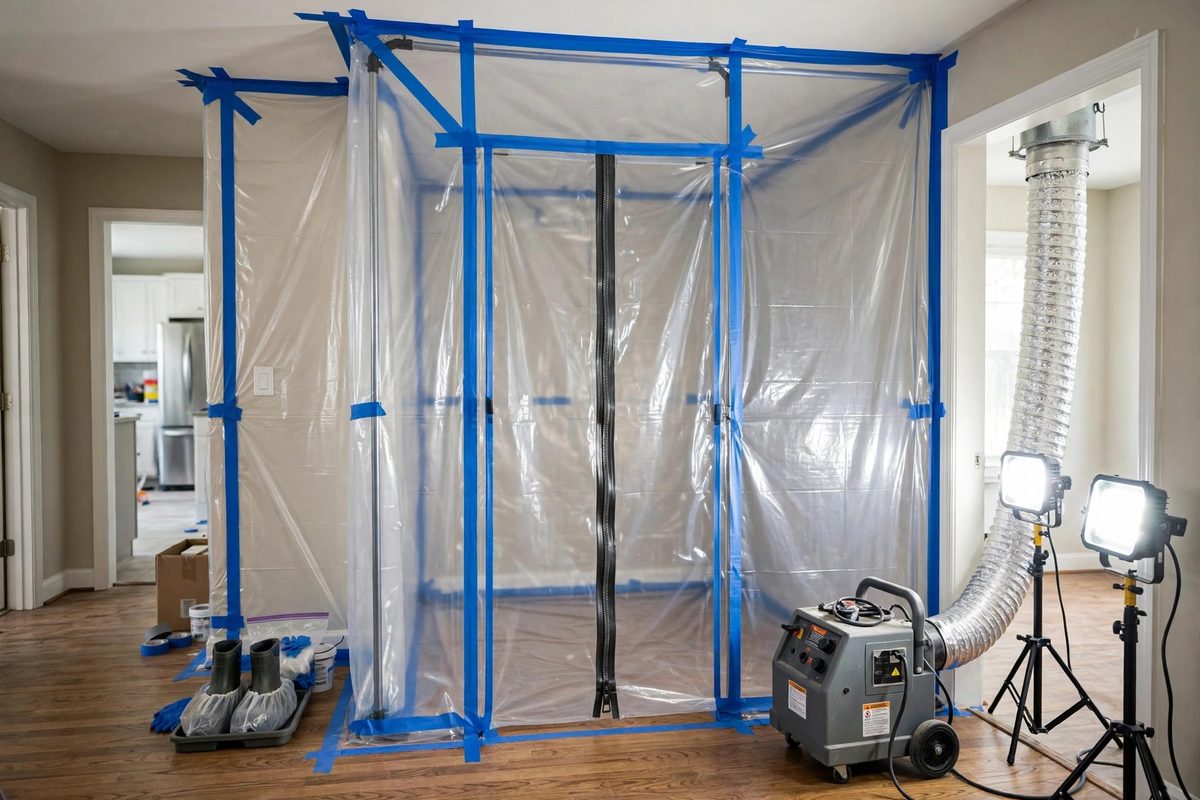
Mold remediation in Kennesaw, GA. Containment, HEPA-filtered removal, and moisture-source correction for North Georgia's humid climate. Free assessment.
Mold needs three things: organic material, moisture, and time. Kennesaw supplies all three in abundance.
Humidity above 70 percent all summer. Mold thrives when relative humidity stays above 60 percent. Kennesaw summers sit above 70 for months. That means any damp material, a wall cavity with a slow leak, a crawlspace with poor ventilation, a bathroom without an exhaust fan, is sitting in mold-growing conditions around the clock. In drier climates, small moisture problems sometimes resolve themselves. In Georgia, they escalate.
Red clay and foundation moisture. North Georgia clay holds water against foundations. Crawlspaces and basements in Kennesaw run damp as a baseline condition, and damp plus dark plus organic material (wood framing, paper drywall backing) is a mold habitat. We find mold in Kennesaw crawlspaces so routinely that we check them on every water job without being asked.
The 48-hour rule. Mold can begin growing on wet organic materials within 48 hours of water exposure. A supply line leak discovered on Monday becomes a mold project by Wednesday. This timeline is why our water damage protocol builds mold prevention in from hour one, and why waiting "to see if it dries out" is the most expensive decision a homeowner can make.
Housing stock. The 1960s–1980s ranch homes have decades of small, unnoticed moisture history: window leaks, old bathroom fans venting into attics, condensate lines with slow drips. Newer builds are tighter, which is better for energy and worse for moisture escape. Both eras grow mold. They just grow it in different places.
---
Mold remediation done wrong spreads mold through the whole house. Our protocol is built around one principle: the work area stays sealed until the job is verified clean.
1. Inspection and moisture mapping. We find the mold you can see and the moisture feeding what you cannot. Meters and visual inspection map the full extent. No scope gets written from a glance.
2. Containment. Polyethylene barriers seal the work area. Negative air pressure keeps spores from migrating to clean rooms. This is the step DIY and cheap contractors skip, and it is the step that matters most.
3. HEPA-filtered removal. Contaminated porous materials (drywall, insulation, carpet) are removed under containment. Non-porous surfaces are HEPA-vacuumed and treated. Air scrubbers run throughout.
4. Antimicrobial treatment. Exposed framing and surfaces get antimicrobial application. This is prevention, not perfume: it makes regrowth harder on the materials that stay.
5. Moisture source correction. The leak gets fixed, the drainage gets addressed, the ventilation gets corrected. Remediation without source correction is a recurring subscription you did not sign up for.
6. Verification. Visual clearance plus moisture readings confirming the source is dry. We do not call it done until the conditions that grew the mold are gone.
---
We find the mold you can see and the moisture feeding what you cannot. Meters and visual inspection map the full extent. No scope gets written from a glance.
Polyethylene barriers seal the work area. Negative air pressure keeps spores from migrating to clean rooms. This is the step DIY and cheap contractors skip, and it is the step that matters most.
Contaminated porous materials (drywall, insulation, carpet) are removed under containment. Non-porous surfaces are HEPA-vacuumed and treated. Air scrubbers run throughout.
Exposed framing and surfaces get antimicrobial application. This is prevention, not perfume: it makes regrowth harder on the materials that stay.
The leak gets fixed, the drainage gets addressed, the ventilation gets corrected. Remediation without source correction is a recurring subscription you did not sign up for.
Visual clearance plus moisture readings confirming the source is dry. We do not call it done until the conditions that grew the mold are gone. ---
Short answer: often both, in sequence. Here is how to think about it.
You need water damage repair when there is active or recent water: standing water, wet materials, a leak that just happened. The job is extraction, drying, and rebuild. Learn more
You need mold remediation when there is visible growth, musty odor, or a history of moisture that was never properly dried. The job is containment, removal, and source correction.
You need both when the water sat long enough to grow mold, which in Kennesaw can be as little as 48 hours in summer. In that case we run the protocols in order: water first (extract and dry), then mold (contain and remediate). One crew, one scope, no handoff between companies.
If you are unsure which you have, start with an assessment. Meters and inspection answer the question in one visit.
---
Remediation without prevention is a temporary fix. After every mold job, we leave you with a prevention plan built for Georgia:
Control indoor humidity. Keep it below 60 percent, ideally 30–50. In Kennesaw summers, that usually means a dehumidifier in basements and crawlspaces, not just the AC.
Ventilate wet rooms. Bathroom exhaust fans vented to the exterior (not into the attic, which we see constantly in older ranch homes). Range hoods that actually exhaust.
Manage exterior water. Gutters clean and extended away from the foundation. Grading that slopes away from the house. Red clay does not forgive poor drainage.
Fix leaks fast. The 48-hour rule means a supply line drip is a mold appointment. Know where your main shutoff is before you need it.
Watch the usual suspects. Under sinks, around water heaters, behind washing machines, window sills, crawlspace entries. Five minutes of looking every few months beats another remediation.
---
---
"Black mold" usually refers to Stachybotrys, which can produce mycotoxins. But color is not a reliable danger indicator: any extensive indoor mold growth is a problem for air quality and health, especially for kids, elderly, and anyone with respiratory conditions. We treat all mold seriously and identify the extent, not just the color.
Bleach whitens the surface and leaves the roots in porous materials. On drywall and wood, bleach is cosmetic, not remediation. It also does nothing about the moisture source. Small surface mold on tile or glass is fine to clean yourself. Anything in drywall, wood, or larger than a dinner plate needs professional remediation.
Sometimes. If the source and extent are obvious, testing adds cost without changing the protocol. If there is a dispute (insurance, real estate transaction, health concerns), third-party testing documents the species and concentration. We will tell you honestly when testing helps and when it is unnecessary.
Yes, when done completely. Musty odor comes from active microbial growth. Remove the growth, correct the moisture, HEPA-scrub the air, and the odor goes with it. Lingering odor after remediation means something was missed.
Often yes when tied to a sudden, covered water event like a burst pipe. Mold from long-term leaks, humidity, or poor maintenance is usually excluded. Documentation of the water event is what connects the claim. We build that documentation.
A contained single-room job: 1–3 days. Whole-house or crawlspace remediation: up to a week. Drying and verification set the pace, not the calendar. ---
Tell us what happened. We will call back shortly to schedule a look.
Call now for emergency response in Kennesaw and the Atlanta metro.
Call (770) 555-0100