Water damage repair in Kennesaw, GA: extraction, structural drying verified by moisture meters, and rebuild. Burst pipes, basement flooding, storm intrusion. Serving 30144, 30152.
Restoration professionals classify water damage into three categories. The category decides the protocol, the protective equipment, what gets saved, and what gets removed. Any contractor who treats all water the same is cutting corners.
Category 1: Clean water. Supply line breaks, overflowing sinks, rainwater intrusion before it contacts contaminants. This water starts clean, but time degrades it: clean water sitting for 48+ hours in a warm house becomes Category 2. Speed matters most here.
Category 2: Gray water. Dishwasher discharge, washing machine overflow, toilet overflow without solids, sump pump failures. Contains contaminants that can cause illness. Porous materials (carpet pad, insulation) generally cannot be saved after gray water exposure.
Category 3: Black water. Sewage backup, rising floodwater, any water containing human waste or dangerous pathogens. This is a biohazard job: full containment, protective equipment, removal of all porous materials, hospital-grade sanitization. Learn more
---
a Category 1 extraction in one room and a Category 3 remediation across a finished basement are fundamentally different jobs. When we scope your job, we tell you the category and what it means for the protocol. If another contractor quotes without mentioning categories, ask why. ---
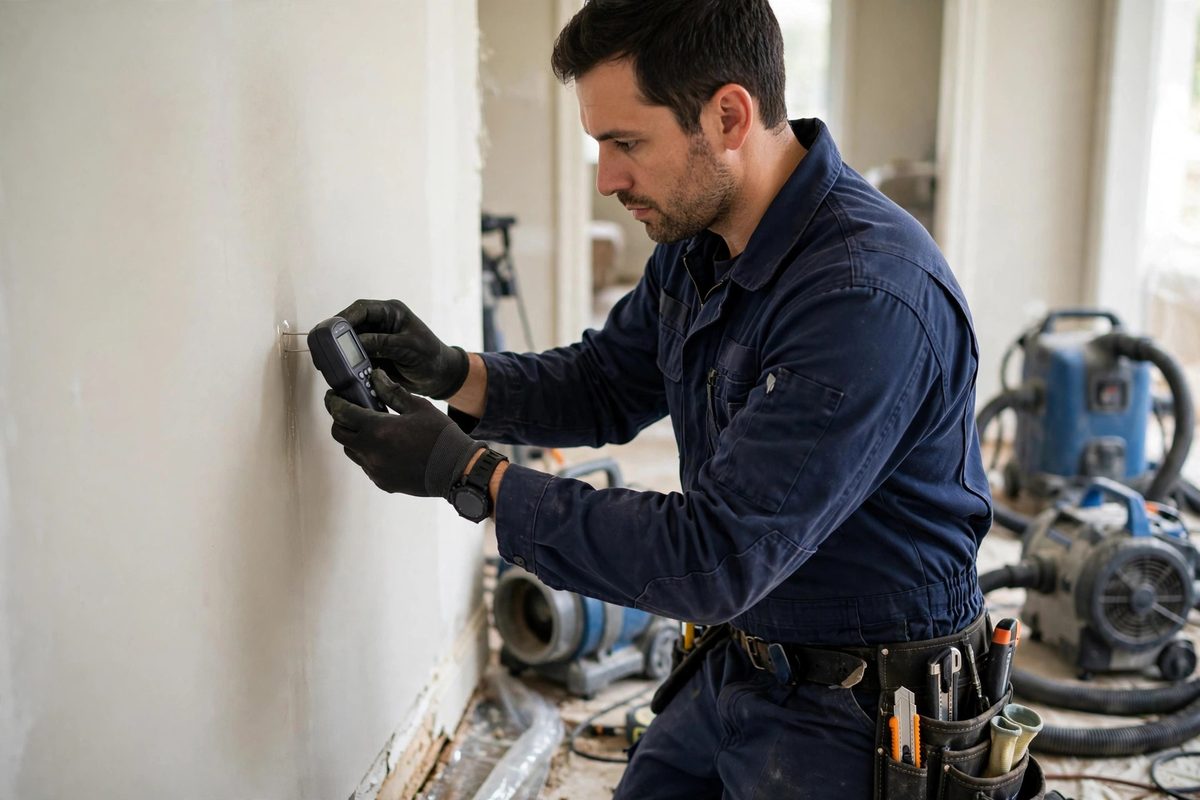
1. Survey and moisture map. Before a single gallon moves, we meter every affected surface and map the damage boundary. Water travels inside walls far beyond the visible stain. The map decides the scope.
2. Source control. The supply line gets shut, the appliance gets disconnected, the roof gets tarped. Drying a house while water is still entering it is bailing a boat with a hole in it.
3. Extraction. Commercial extraction equipment removes standing water: weighted extraction for carpet, squeegee wands for hard surfaces, pumps for basements. This is the highest-leverage hour of the job.
4. Controlled demolition (only what meters demand). Wet drywall below the flood line gets cut. Saturated insulation gets removed. Baseboards come off so wall cavities can breathe. We remove what cannot be dried and preserve everything that can: demolition follows readings, not habit.
5. Engineered drying. Air movers plus dehumidification, placed per the moisture map and checked daily. In Kennesaw's humidity, dehumidification capacity matters more than fan count.
6. Verification and rebuild. Final meter readings across every mapped point. Antimicrobial treatment on exposed framing. Then rebuild: drywall, paint, flooring, trim. You get the reading log with your invoice.
---
Before a single gallon moves, we meter every affected surface and map the damage boundary. Water travels inside walls far beyond the visible stain. The map decides the scope.
The supply line gets shut, the appliance gets disconnected, the roof gets tarped. Drying a house while water is still entering it is bailing a boat with a hole in it.
Commercial extraction equipment removes standing water: weighted extraction for carpet, squeegee wands for hard surfaces, pumps for basements. This is the highest-leverage hour of the job.
Wet drywall below the flood line gets cut. Saturated insulation gets removed. Baseboards come off so wall cavities can breathe. We remove what cannot be dried and preserve everything that can: demolition follows readings, not habit.
Air movers plus dehumidification, placed per the moisture map and checked daily. In Kennesaw's humidity, dehumidification capacity matters more than fan count.
Final meter readings across every mapped point. Antimicrobial treatment on exposed framing. Then rebuild: drywall, paint, flooring, trim. You get the reading log with your invoice. ---
Burst pipes in winter. Kennesaw's 1960s–1980s ranch stock has original copper and galvanized supply lines hitting end of life. A hard freeze finds the weak joint, usually in an exterior wall or unconditioned crawlspace. We run more burst-pipe calls in January and February than any other type.
Storm intrusion, spring and summer. 54.6 inches of annual rain, concentrated in severe spring storms and summer downpours. Wind-driven rain finds roof vulnerabilities; overwhelmed gutters dump water at the foundation; red clay soil holds it there. After every major storm, our phones ring with the same three calls: roof leaks, basement seepage, and flooded window wells.
Appliance and plumbing failures, year-round. Water heaters (10–12 year lifespan, and Kennesaw has a lot of 15-year-old ones), washing machine supply hoses, dishwasher lines, toilet supply valves. These are the slow ambush: a supply hose fails while you are at work, and you come home to a first floor under an inch of water.
Foundation seepage on red clay. North Georgia clay drains slowly. After sustained rain, hydrostatic pressure pushes water through foundation seams, cracks, and the cove joint where wall meets floor. This is the most misdiagnosed water problem in Kennesaw: it looks like a plumbing leak, but no plumber can fix soil hydrology.
---
H3: Burst pipes: Kennesaw's winter specialty.
When a pipe bursts, minutes matter more than in any other water event: pressurized supply lines can release hundreds of gallons per hour. Our burst-pipe protocol: main shutoff guidance on the phone before we arrive, full extraction on arrival, wall cavities opened along the water path, and drying verified by meter. We coordinate directly with your plumber on the repair itself, sequencing the work so restoration follows repair, not the reverse. After the job, we walk you through freeze prevention: which pipes are exposed, where insulation is missing, and what to do before the next hard freeze. Prevention advice is free. The next burst pipe is not.
H3: Basement flooding on red clay.
Kennesaw basements flood for a specific reason: clay soil plus heavy rain equals hydrostatic pressure, and water takes the path of least resistance through seams and cracks. Our basement protocol starts with identifying the entry point, because extracting without addressing the source guarantees a repeat. Finished basements get special attention: wet drywall wicks upward, insulation behind it stays wet for weeks, and the mold that follows is the expensive part. We remove what meters say is unsalvageable, dry what can be saved, and give you straight drainage guidance: grading, gutters, and sump strategy. We do the restoration. We tell you honestly what prevents the next one.
H3: Wet carpet and furniture: save or replace?
We assess wet carpet, pad, and upholstery against the water category and the meter readings, then give you a straight answer. The honest version: carpet pad almost never survives a real soaking and usually gets replaced. Carpet itself can often be dried and saved after clean water. Upholstery depends on the piece and the contamination level. We do not sell drying for materials that should be replaced, and we do not recommend replacement for materials that dry fine. The meter readings decide, and we show them to you.
---
We do not publish price lists, because honest pricing depends on scope. Here is what actually moves the number, so you can read any quote intelligently:
Water category. Category 1 clean water is the simplest job. Category 3 requires containment, protective equipment, material removal, and sanitization: more labor, more protocol, higher cost.
Square footage and material. One room of tile is a day. A finished basement with drywall, insulation, and carpet is a week. Hardwood floors add specialized drying time.
How long it sat. Water found in an hour is an extraction job. Water found in a week is a mold job wearing a water job's clothes. Time is the most expensive variable.
---
the moisture map, the category, the affected materials, and the drying plan. You get a written scope with a number before work starts. What we will not do is quote blind over the phone: any contractor who does is either guessing or planning change orders. ---
---
Immediately for the source and the standing water. The 48-hour mold window is real, and in Kennesaw humidity, assume the fast end. Extraction within hours versus days is the difference between a drying job and a mold remediation job.
Often yes, if we get to them fast. Hardwood cupping can sometimes be reversed with specialized drying, but it requires monitoring over days, not hours. The sooner we start, the better the odds. We will tell you honestly when replacement is the smarter call.
Usually not for clean water jobs. Equipment is loud (air movers and dehumidifiers run 24/7), but the house remains livable. Category 3 jobs may require vacating affected areas. We will tell you upfront.
Only what the meters say is unsalvageable. Drywall that wicked water above the flood line gets flood-cut. Drywall that meters dry stays. We do not demolish on habit.
Typically yes for the sudden burst and the resulting water damage. The pipe repair itself is sometimes excluded as maintenance. Long-term slow leaks are usually not covered. Documentation wins the gray areas, which is why we build your file as we work.
Meter readings. We log moisture content at mapped points throughout the job and give you the final readings. "Looks dry" is not a completion standard we accept. ---
Tell us what happened. We will call back shortly to schedule a look.
Call now for emergency response in Kennesaw and the Atlanta metro.
Call (770) 555-0100